
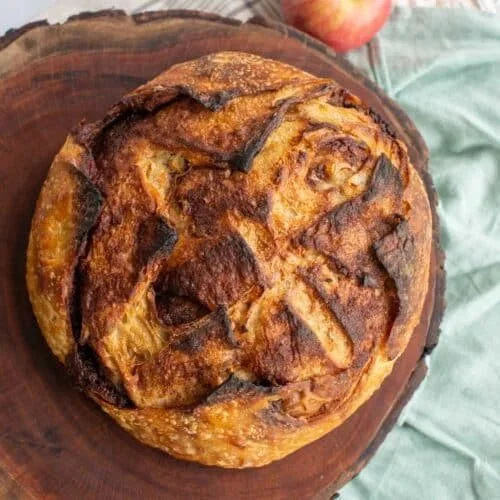
Apple Cinnamon Sourdough Bread is a delightful recipe that marries the aromatic essence of fresh apples and spicy cinnamon with the delightful tang of sourdough. Imagine the sensation of slicing through a crusty, golden loaf only to reveal a soft, chewy interior studded with luscious apple bits, all while the warm scent of cinnamon wafts through your kitchen. This comforting, family-friendly creation is perfect for breakfast, an afternoon snack, or as a warm addition to any gathering. In this article, I’ll guide you through a step-by-step process to create this mouth-watering bread that is bound to evoke nostalgia with every bite.
Ingredients
To make your Apple Cinnamon Sourdough Bread, gather the following ingredients, each adding its own unique character to the final loaf:
- 35 grams ripe starter (about 2 Tablespoons): The foundation of your sourdough, this bubbly starter brings a tangy flavor and contributes to the bread’s distinctive texture.
- 35 grams all-purpose flour or bread flour (about 1/4 cup): Essential for structure, this flour helps balance the moisture from the apples.
- 35 grams water (about 2 Tablespoons): Water hydrates the flour, helping to develop gluten.
- 100 grams levain (scant 1/2 cup): A bubbly mixture of flour and water that introduces wild yeasts for fermentation.
- 250 grams water (about 1 cup): Added at a warm temperature to encourage fermentation.
- 200 grams grated apple (about 1 3/4 cup): Use juicy varieties like Honeycrisp or Granny Smith for maximum flavor and moisture.
- 50 grams whole wheat flour (about 1/3 cup): This adds depth and a richer flavor to the dough.
- 450 grams bread flour (about 3 1/4 cup): Provides the desired chewiness and strength.
- 10 grams salt (about 1.5 teaspoons, reserved): Essential for flavor and regulating fermentation.
- 25 grams water (about 5 teaspoons, reserved for adding in with the salt): Helps dissolve the salt before incorporation.
- 45 grams unsalted butter (3 Tablespoons): Adds rich flavor and a tender crumb.
- 80 grams brown sugar (about 1/3 cup): Sweetness that complements the apples beautifully.
- 4 grams ground cinnamon (about 1 teaspoon): Aromatic spice that delivers warmth and comfort.
- 3 grams cornstarch (about 1 teaspoon): Helps thicken the filling and holds the moisture from the apples.
- 2 grams salt (1/4 teaspoon): Enhances the flavor of the filling.
With these simple yet flavorful ingredients, you’ll embark on a baking adventure that results in a loaf that is both satisfying and delicious.
Step-by-Step Directions
Day 1: Levain/Mix/Bulk Fermentation/Shape/Cold Bulk Fermentation
Mix Levain:
Start by combining your ripe, active sourdough starter with the all-purpose or bread flour and water in a bowl. Cover it loosely with a cloth and let it sit at room temperature for 3-4 hours, until it has doubled in size, is bubbly, and has a peaked top. If you have a particularly vibrant starter, you can substitute it directly for the levain in this recipe.
Grate Apple:
Next, take two medium-sized apples and grate them using a box grater until you reach 200 grams, then set them aside. If the apples are very juicy, you might want to gently squeeze them to release some excess moisture before adding them into the dough. If you’re feeling adventurous, try reserving some of that juice to inject additional flavor later on.
Fermentolyse:
Once your levain is bubbly and has the distinct milky, sweet aroma, it’s time to mix the dough. Combine 100 grams levain, 250 grams of warm water, your grated apples, 450 grams of bread flour, and 50 grams of whole wheat flour in a large bowl. Stir to moisten all the flour, then let this mixture rest for 30 minutes.
Mix the Dough:
After the rest, add the reserved 10 grams of salt and 25 grams of water into the dough mixture. Use your hands to incorporate the salt by squeezing the dough and pinching it together. You may need to wet your hands to handle the sticky dough, which should eventually come together so that everything is well combined. Transfer the dough to a clean bowl and cover it.
Stretch and Folds:
Over the next two hours, perform a series of stretch and folds to develop gluten strength. To do this, wet your hand to prevent sticking, reach under the dough and stretch it upward, folding it back over itself. Rotate the bowl a quarter turn and repeat this process until you’ve completed four folds. After each fold, let the dough rest for 30 minutes. You’ll notice it becoming smoother and more elastic.
Bulk Fermentation Continued
Bulk Fermentation:
After your final stretch and fold, let the dough rest in a warm spot for an additional 2-2.5 hours. The dough should puff up and show signs of fermentation with bubbles and a slight pull away from the bowl edges. If necessary, give it some additional time until it reaches this point.
Mix Cinnamon Filling:
While waiting, prepare the cinnamon filling by combining softened butter, brown sugar, ground cinnamon, cornstarch, and a touch of salt. Set this aside for later use.
Prepare Bowl:
Prepare a bowl or banneton with either a liner or sprinkle it generously with rice flour to prevent sticking.
Shaping
Shaping:
When your dough is ready, gently turn it out onto your countertop, shaping it into a 12 by 12-inch square. Spread most of the cinnamon filling across the top, folding the sides of the dough towards the center, and then applying the remaining filling before rolling it up. Place the shaped dough seam-side down in the prepared banneton, taking care not to handle it too much, as you want to retain that lovely moisture from the filling.
Cold Bulk Fermentation
Cold Bulk Fermentation:
Cover the dough with plastic wrap or a shower cap, then refrigerate it overnight for about 18-24 hours. Alternatively, if you’re short on time, allow it to rise at room temperature for an additional 3-4 hours, ensuring you cool it down a bit before scoring.
Baking
Pre-heat the Oven:
Set your Dutch oven in the oven and preheat it to 500ºF, letting it heat for about 30 minutes to ensure it’s evenly hot.
Scoring:
Once preheated, carefully take the dough from the refrigerator. Remove the cover, and place a piece of parchment paper over the dough. Flip the banneton upside down so the dough sits on the parchment. Use a bread lame or sharp knife to score the top with a single cut, about an inch deep.
Bake:
Carefully remove the hot Dutch oven, take off the lid, and place your loaf inside, parchment and all. Replace the lid, lower the oven temperature to 450ºF, and bake for 25 minutes. After 25 minutes, remove the lid and lower the temperature to 400ºF, baking for another 20 minutes until the internal temperature reaches 205ºF. For those concerned about burning, place a baking sheet on the rack beneath your Dutch oven to catch any excess heat.
Cool and Enjoy
Let your loaf cool completely on a wire rack before slicing and savoring every comforting bite.
Tips & Tricks
To enhance your apple cinnamon sourdough experience, consider incorporating chopped nuts into the filling, such as pecans or walnuts, for added crunch. Also, using a variety of apples can create a more complex flavor profile. Keep an eye on the baking times as oven temperatures can vary; adjust as necessary to achieve that perfect golden crust.
Serving Suggestions & Pairings
This apple cinnamon sourdough bread is best enjoyed warm, slathered with a bit of butter or cream cheese. It pairs beautifully with a hot cup of tea or coffee, making it a great option for breakfast or a sweet afternoon treat. Additionally, consider serving slices with a smear of caramel or a drizzle of honey for an extra indulgent experience.
Nutritional Information
A slice of apple cinnamon sourdough bread contains approximately 150-200 calories, depending on the size and thickness. It provides essential nutrients like carbohydrates, dietary fiber, and some protein, making it a relatively balanced treat when enjoyed in moderation.
Storing Tips & Variations
Store your baked bread in a paper bag at room temperature for up to three days for optimal freshness, or wrap it tightly in plastic for longer storage. You can freeze slices for later enjoyment; simply thaw as needed and toast to restore its delightful texture. For variations, try substituting the filling with other fruits like pears or adding different spices such as nutmeg for a unique twist.
Conclusion
Apple Cinnamon Sourdough Bread is a delightful recipe that combines the comforting flavors of fall with the unique tanginess of sourdough. I encourage you to try your hand at this recipe and share your experience in the comments. Your kitchen is in for a treat!
FAQs
-
Can I use store-bought apple sauce instead of fresh apples?
- While using apple sauce is possible, fresh grated apples provide a better texture and flavor in this recipe. If you use apple sauce, you may need to adjust the water content to avoid a too-wet dough.
-
How can I tell if my bread is fully baked?
- The internal temperature should reach 205ºF. Additionally, a hollow sound when tapping the bottom of the loaf is a good indicator of doneness.
-
Can I make this bread gluten-free?
- While traditional sourdough uses wheat flour, you can experiment with gluten-free flour blends. However, the texture and rise may vary substantially.
-
What should I do if my dough doesn’t rise?
- Ensure your starter is fresh and bubbly, and that the fermentation environment is warm enough. Sometimes, additional time might be needed if the dough is chilled initially.
-
Is it necessary to use a Dutch oven for baking?
- While a Dutch oven helps create steam for a better rise and crust, you can bake the bread on a baking stone or sheet. Just ensure proper steam in the oven during the first part of baking for best results!
Apple Cinnamon Sourdough Bread
Ingredients
Method
- Start by combining your ripe, active sourdough starter with the all-purpose or bread flour and water in a bowl. Cover it loosely with a cloth and let it sit at room temperature for 3-4 hours, until it has doubled in size, is bubbly, and has a peaked top.
- Grate two medium-sized apples until you reach 200 grams, then set them aside. Squeeze out some excess moisture if they are very juicy.
- Combine 100 grams levain, 250 grams of warm water, grated apples, 450 grams of bread flour, and 50 grams of whole wheat flour in a large bowl. Stir to moisten all the flour, then let this mixture rest for 30 minutes.
- Add the reserved 10 grams of salt and 25 grams of water into the dough mixture. Incorporate the salt by squeezing and pinching the dough together.
- Over the next two hours, perform a series of stretch and folds to develop gluten strength, resting the dough for 30 minutes after each fold.
- After the final stretch and fold, let the dough rest in a warm spot for an additional 2-2.5 hours.
- Prepare the cinnamon filling by combining softened butter, brown sugar, ground cinnamon, cornstarch, and salt.
- Prepare a bowl or banneton with a liner or sprinkle it generously with rice flour.
- Gently turn the dough out onto your countertop and shape it into a 12 by 12-inch square. Spread most of the cinnamon filling across the top, folding the sides of the dough towards the center and applying the remaining filling, then roll it up.
- Place the shaped dough seam-side down in the prepared banneton, cover it, and refrigerate it overnight for about 18-24 hours.
- Preheat the oven to 500ºF, placing your Dutch oven inside to heat.
- Once preheated, carefully flip the banneton to place the dough on a piece of parchment paper. Score the top with a single cut about an inch deep.
- Bake in the hot Dutch oven, covered, at 450ºF for 25 minutes. Then remove the lid and lower oven to 400ºF for another 20 minutes until the internal temperature reaches 205ºF.
- Allow the loaf to cool completely on a wire rack before slicing and enjoying.

Leave a Reply