
Vegetarian Thai Red Curry is a delightful dish that brings the vibrant flavors of Southeast Asia right to your kitchen. This easy-to-follow recipe is not only simple and quick to prepare but also serves as a comforting meal that can evoke feelings of warmth and satisfaction. With its colorful mix of vegetables simmered in rich coconut milk and aromatic spices, it’s perfect for family dinners or a cozy night in. This step-by-step guide will take you through creating this wholesome Thai-inspired option that’s entirely plant-based and packed with flavor.
Ingredients
To create your Vegetarian Thai Red Curry, you’ll need the following ingredients that ensure a creamy and aromatic dish:
- 1 tablespoon olive oil: a healthy fat that enhances flavor.
- 1 small white onion or yellow onion: offers a sweet base for the curry.
- 1-2 dried red chili: for that hint of heat and earthy aroma.
- 1 tablespoon grated ginger: provides a zesty and warming note.
- 1 tablespoon grated garlic: adds depth and savory richness.
- 1 small zucchini (sliced): contributes a tender, juicy texture.
- 1 red pepper (sliced): brings a sweet and crisp contrast.
- 1/2 green pepper (sliced): offers a slightly bitter crunch.
- 1/2 orange pepper (sliced): adds sweetness and a pop of color.
- 1 small head of broccoli (cut into florets): for crunch and nutrition.
- 2 carrots (diced): add sweetness and a vibrant hue.
- 1/2 cup water: helps simmer the vegetables.
- Salt: to taste, enhancing all the flavors.
- 2 tablespoons + 1 teaspoon Thai red curry paste: for the signature curry flavor.
- 14 oz can coconut milk: creates a creamy and luscious base.
- 1.5 teaspoons sriracha: adds a fiery kick.
- 1/4 teaspoon turmeric powder: for color and health benefits.
- 1.5 teaspoons coconut sugar: balances the spices with just a hint of sweetness.
- 3 teaspoons rice vinegar: adds a touch of acidity.
- 1-2 teaspoons soy sauce (optional): for an umami boost.
- Juice of 1/2 lime: brightens the entire dish.
- Basil or cilantro (to garnish): fresh herbs that finish the dish beautifully.
Step-by-Step Directions
-
Prepare the Coconut Mixture: In a bowl, mix together the coconut milk with the Thai red curry paste and set aside. This will be the heart of your sauce, brimming with flavor.
-
Sauté Aromatics: Heat the olive oil in a pan over medium heat. Once hot, add the dried red chilies and sauté them for a few seconds until fragrant. This helps release their flavors.
-
Cook the Onion: Add the chopped onion to the pan and cook until soft and translucent, which should take about 4-5 minutes. The goal is to build a fragrant base for the curry.
-
Add Ginger and Garlic: Stir in the grated ginger and garlic, cooking for about 30 seconds until you can smell the delicious aroma—this is where the magic begins!
-
Incorporate Vegetables: Add the diced carrots and sliced zucchini to the pan, mixing well. Following that, add the broccoli florets and sliced peppers, stirring everything for a minute. Season with salt and pour in the water, allowing the vegetables to soften.
-
Combine Sauce Ingredients: After cooking the vegetables for about 3 more minutes, pour in the prepared coconut milk and Thai red curry mixture. Add in the coconut sugar and turmeric powder, stirring to combine.
-
Add Spice and Simmer: Incorporate the sriracha and rice vinegar, mixing well. Allow the curry to come to a simmer on medium-low heat, cooking for about 5-7 minutes until the veggies are tender, stirring occasionally to prevent sticking.
-
Final Touches: Once cooked, remove the pan from the heat. If using, stir in the soy sauce, and then squeeze in the fresh lime juice to brighten the flavors.
-
Serve: Garnish the curry with fresh basil or cilantro, and serve it hot with fluffy jasmine rice, creating a wholesome, satisfying meal.
Tips & Tricks
- Adjust the Spice Level: If you like your curry hotter, feel free to add more sriracha or even fresh chilies to suit your taste.
- Vegetable Variations: You can swap in seasonal vegetables based on what you have, such as eggplant or snap peas.
- Thicker Sauce: If you prefer a thicker curry, let it simmer longer to reduce the liquid, or mix in a cornstarch slurry (1 tablespoon cornstarch mixed with 2 tablespoons of water).
- Creaminess: For an extra creamy texture, add a bit more coconut milk towards the end of cooking.
- Make Ahead: This curry is an excellent make-ahead meal and tastes even better the next day as the flavors meld.
Serving Suggestions & Pairings
This Vegetarian Thai Red Curry is best served with a generous scoop of fluffy jasmine rice or coconut rice, enhancing the creamy sauce. You can also pair it with naan or fresh spring rolls for a delightful contrast. It’s perfect for a family dinner, a potluck, or a cozy movie night in. Feel free to serve it alongside a chilled cucumber salad to balance the heat.
Nutritional Information
This dish is not just flavorful but also healthy! Each serving is approximately 350-400 calories, depending on the amount of oil and rice used. It provides a variety of nutrients, including vitamins A and C from the vegetables, healthy fats from the coconut milk, and antioxidants from spices like turmeric. To maintain balance, serve with a side of whole grains, and you’ll have a wholesome meal.
Storing Tips & Variations
- Storage: Store any leftovers in an airtight container in the fridge for up to 3-4 days. Ensure the curry has cooled down before sealing.
- Freezing: For longer storage, freeze in portions for up to 3 months. Thaw overnight in the fridge before reheating.
- Reheating: Gently reheat on the stove over medium-low heat until warmed through. You may need to add a splash of water or extra coconut milk to maintain the desired consistency.
- Variations: Feel free to experiment with proteins like chickpeas or tofu added for an extra dose of heartiness!
Conclusion
Now that you have the recipe for Vegetarian Thai Red Curry at your fingertips, it’s time to bring those rich flavors into your home. This dish is not only an experience for your taste buds but also a source of warmth and comfort, perfect for any occasion. Try making this recipe soon and let the comforting aroma fill your kitchen. Don’t forget to share your experiences or any personal twists you add!
FAQs
1. Can I make this dish spicy?
Absolutely! You can increase the sriracha or add fresh chilies to adjust the spice level to your liking.
2. What if I don’t have coconut milk?
If coconut milk isn’t available, you can substitute it with any plant-based milk, though the flavor will differ somewhat. A mix of cashew cream can also work.
3. Can I use frozen vegetables instead?
Yes, frozen vegetables can be used and make meal prep even easier! Just adjust the cooking time accordingly.
4. Is this curry gluten-free?
Yes, if you use gluten-free soy sauce or omit it, this would be safe for a gluten-free diet.
5. How can I make this dish more filling?
To make the dish more filling, serve it with a side of quinoa, brown rice, or even a warm sourdough bread for a comforting meal.
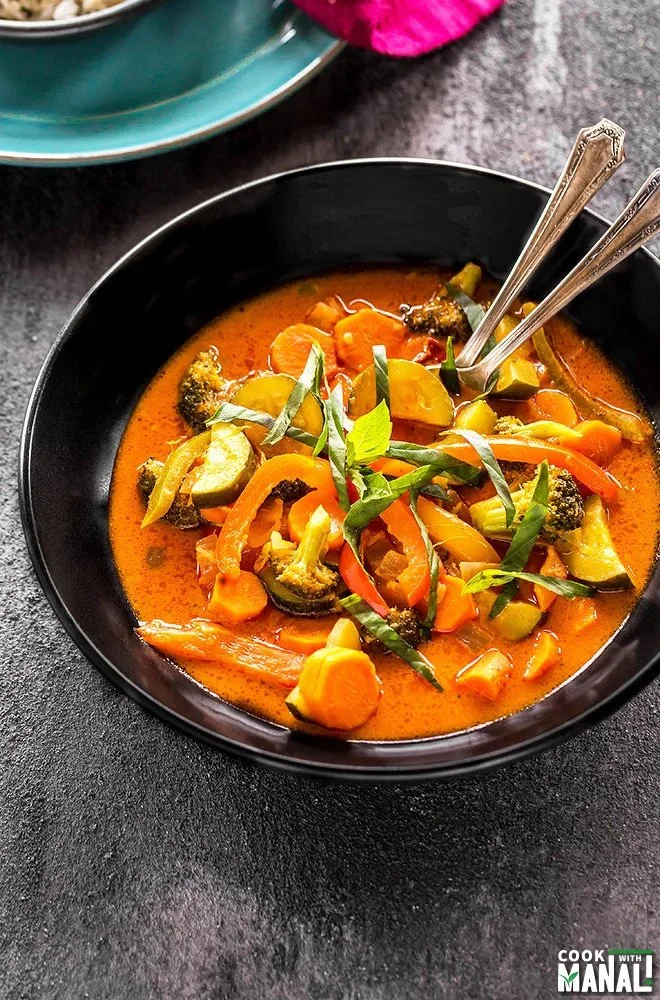
Vegetarian Thai Red Curry
Ingredients
Method
- In a bowl, mix together the coconut milk with the Thai red curry paste and set aside.
- Heat the olive oil in a pan over medium heat.
- Add the dried red chilies and sauté them for a few seconds until fragrant.
- Add the chopped onion to the pan and cook until soft and translucent, about 4-5 minutes.
- Stir in the grated ginger and garlic, cooking for about 30 seconds.
- Add the diced carrots and sliced zucchini, then add the broccoli florets and sliced peppers, stirring everything for a minute.
- Season with salt and pour in the water, allowing the vegetables to soften.
- Pour in the prepared coconut milk and Thai red curry mixture, adding in the coconut sugar and turmeric powder.
- Incorporate the sriracha and rice vinegar, mixing well, and allow to simmer for about 5-7 minutes.
- Once cooked, remove from heat, stir in the soy sauce if using, and squeeze in the lime juice.
- Garnish with fresh basil or cilantro and serve hot with jasmine rice.




Leave a Reply